


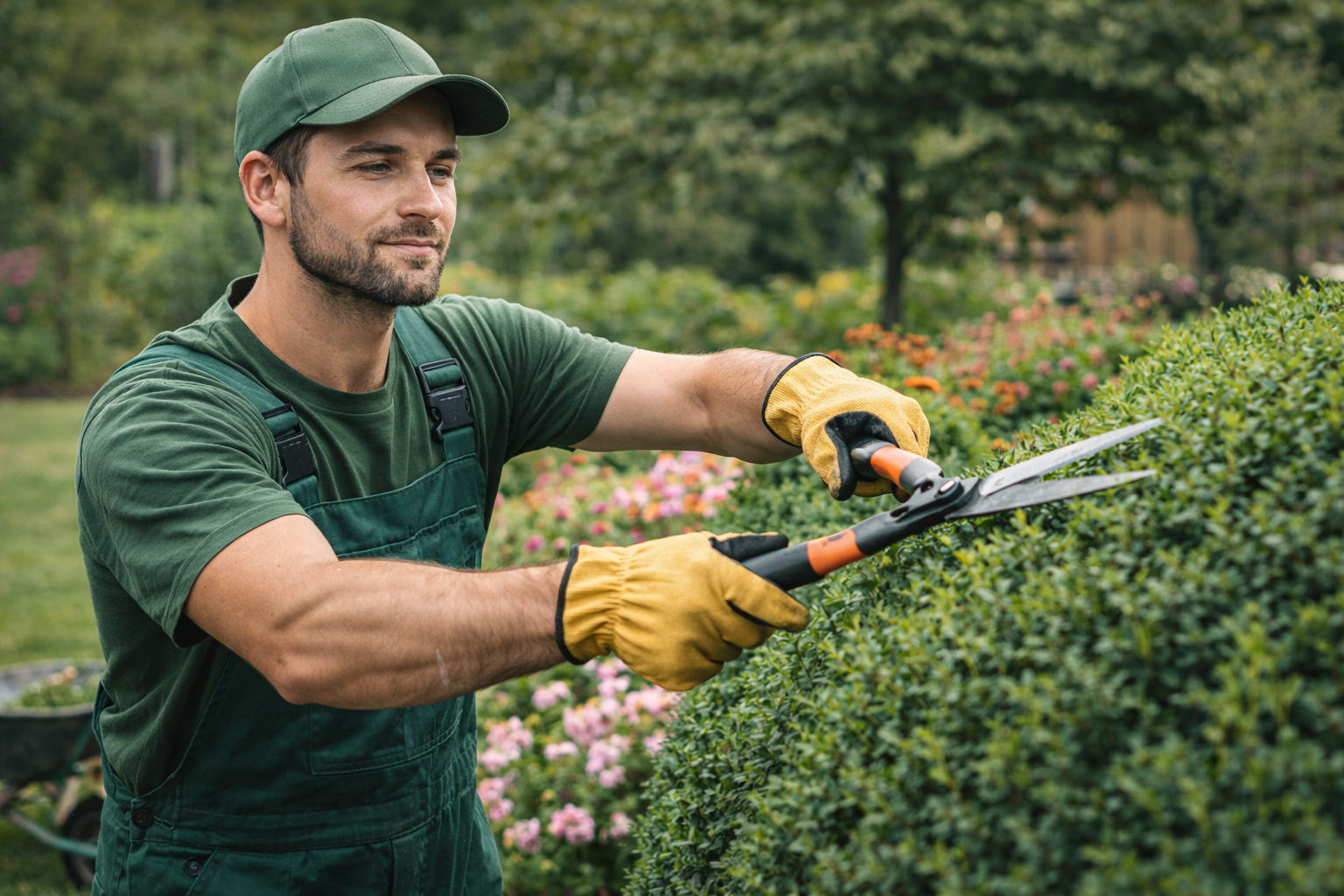
If you enjoy working outdoors, a job as a gardening worker can be very satisfying. In 2025, salaries in this industry are higher than many people expect, especially if you already have some experience. However, pay depends on several specific factors that are worth knowing before you accept an offer. This will help you better assess whether the proposed rate is right for you. Read this guide to the end and find out how much you can realistically earn.
What are the salaries of gardening workers in Poland in 2025?
Salaries for gardening workers in Poland in 2025 vary considerably, but typical ranges can still be identified. The average total monthly salary for gardeners is approximately between five and a half and just under six thousand zlotys gross. A lot depends on whether you work as an assistant, an independent gardener or a garden design specialist. The greater the scope of responsibility, the higher the amount on your payslip.
To better understand what causes differences in gardening worker salaries, pay attention to the most important factors:
- level of experience and independence at work;
- region and size of the town or city where you work;
- the type of gardening work you perform on a daily basis;
- type of employment and possible overtime.
Together, these factors determine whether your salary as a gardening worker will be closer to the lower or upper end of the pay range. If you work in a large city, serve demanding clients and independently manage projects, you have a chance of earning noticeably higher rates. For simple maintenance work in smaller towns, salary levels are usually lower. It is therefore worth looking at salary in the context of the entire job offer.
What are the salary ranges for gardening workers depending on experience?
Experience has a very strong influence on how much a gardening worker earns. Beginner gardening workers who are just learning the profession and often work as assistants receive the lowest rates. After a few seasons of work and gaining practical experience in maintenance, planting or minor paving work, you can expect a much better salary. The highest earnings are available to people who can independently manage projects, design gardens or supervise a team.
Below you will find approximate gross monthly salary ranges for gardening workers in 2025:
| Gardening worker experience level | Gross monthly salary |
| Beginner gardening worker, assistant | PLN 4,800–5,200 |
| Gardening worker with intermediate experience | PLN 5,000–6,200 |
| Experienced gardening worker in a larger company | PLN 6,200–7,500 |
| Specialist, garden designer, advanced work | PLN 7,500 and above |
The table above shows that after just a few years of work, you can realistically exceed PLN 6,000 gross per month. If you develop your skills towards more demanding services, such as garden design, irrigation system installation or the arrangement of prestigious green spaces, your salary can reach the highest ranges. In large cities, it is easier to find offers at the upper end of the salary range. In smaller towns, salaries often remain closer to average or lower levels.
What determines gardening worker salaries in different workplaces?
A gardening worker can work in many different places, from small gardening companies to large garden centres and companies maintaining residential estates or public spaces. Salaries can vary slightly in each of these settings. The key factor is whether you perform simple maintenance work or more complex projects and installations. It also matters whether you deal directly with clients and take responsibility for the final result.
If you work in or around a large city, rates for gardening workers are usually higher than in rural areas. This results from greater demand for services and higher client budgets. In smaller towns, work is often more seasonal and less regular, which can affect monthly earnings.
There is also a difference between full-time employment and seasonal contracts or project-based work. As a full-time gardening worker, you can expect a stable salary, although with less flexibility. With project-based work or self-employment, earnings can vary more, but the upper limit is usually higher. It is important to consciously choose the working model that best suits your financial needs and lifestyle.
What interesting facts are associated with gardening worker salaries?
An interesting fact is that a gardening worker in a large city can earn more than some office workers at the beginning of their careers. This is especially true when you work on demanding projects and serve premium clients. In such cases, a gardener is not only a contractor but also an advisor who helps choose plants, materials and technical solutions.
It is also worth knowing that seasonality plays a major role in the gardening industry. Spring and summer are periods of intensive work and higher earnings because this is when the number of projects is highest. In autumn and winter, some gardening workers move on to other duties, such as general maintenance or snow removal. If you take a flexible approach to your duties, you can maintain a fairly stable income throughout the year.
How does seasonal work affect a gardening worker’s salary?
For gardening workers, seasonality is one of the most important factors affecting earnings. There are the most projects in spring and summer, which means more working hours. During this period, you can expect overtime, weekend work and higher monthly earnings. In winter, the pace slows down, but that does not always mean there is no work.
In many gardening companies, winter duties include maintaining grounds, preparing equipment, pruning trees or performing other tasks. Gardening workers sometimes also take on additional jobs in other industries to maintain a similar level of income. It all depends on how flexible you are and what opportunities are available in your area.
If you work full-time as a gardening worker in a larger company, seasonality is often partly offset by a fixed base salary. If you work only on individual contracts, you can earn very well during the season, but you need to plan your finances more carefully during quieter months. It is therefore a good idea to treat the busiest working period as an opportunity to build a financial cushion.
What can you do to increase your earnings as a gardening worker?
You have a real influence on how much you earn as a gardening worker. One of the most important steps is gaining experience and expanding your range of skills. If you can do more than just mow lawns, and you are also able to create a garden from scratch, install an irrigation system and care for more demanding plant species, you become more valuable to an employer. This naturally translates into higher rates.
If you want to increase your earnings as a gardening worker, focus on several simple actions:
- learn new techniques and types of gardening work;
- gain experience on larger and more demanding projects;
- focus on quality of workmanship and good client relationships;
- consider working in a larger city or for a company serving premium clients.
This approach strengthens your position on the labour market and gives you more arguments when discussing a pay rise. Over time, you can move from simple work to independently managing projects, which is always associated with better pay. If you are serious about this industry, treat every project as an opportunity to learn and build your portfolio. It is an investment that can pay off very quickly.
Is working as a gardening worker a good financial prospect for the future?
Working as a gardening worker offers quite a solid financial outlook, especially if you enjoy what you do and want to continue developing your skills. The gardening industry remains strong because interest in well-maintained gardens, terraces and green spaces around homes and businesses is growing. More and more people prefer to outsource this work to specialists instead of doing everything themselves. This creates genuine opportunities for gardeners and gardening workers to increase their earnings.
If you combine practical experience, good work organization and a willingness to learn, you can eventually reach salary levels significantly above the industry average. This is not a job for someone who wants to sit in an office, but if you value physical activity and contact with nature, it can provide a great deal of satisfaction. You also have the opportunity to see the results of your work almost immediately, which is a major advantage. After a few seasons, you may find that your skills genuinely translate into higher earnings.
What are the most frequently asked questions about gardening worker salaries? (FAQ)
Before deciding to work as a gardening worker, it is useful to know the answers to several practical questions. This will make it easier to prepare for salary discussions and consciously choose the best offer for you. Below you will find the most frequently asked questions together with specific answers.
1. How much does a beginner gardening worker earn?
At the beginning of your career as a gardening worker, you can usually expect to earn around PLN 4,800–5,200 gross per month. This level mainly applies to people who are just learning the profession and performing simpler tasks under the supervision of more experienced colleagues. Over time, as you begin working more independently, your rate should increase. In many companies, after one or two seasons you can negotiate a pay rise.
2. What earnings are realistic after several years of working in gardening?
After several years of regular work as a gardening worker, earnings of between PLN 5,000 and more than PLN 6,000 gross per month become realistic. The condition is that you continue developing your skills and do not limit yourself to only the simplest tasks. If you can handle a broader range of work and are able to manage a garden from design through to maintenance, your negotiating position improves significantly. In larger cities, this salary level is usually available sooner than in smaller towns.
3. Does the type of employment affect a gardening worker’s salary?
The type of employment has a significant impact on your earnings. Full-time employment usually means a stable and predictable salary but less flexibility in terms of rates for individual projects. Contract work or running your own business can provide higher income during the season, but requires better financial planning. If you know how to manage your project schedule and maintain good client relationships, a more flexible working model may prove beneficial.
4. Does location have a major impact on how much a gardening worker earns?
Yes, the place of work clearly affects earnings. In large cities, salaries for gardening workers are generally higher than in smaller towns. This is due to greater demand for services, higher client budgets and a more intensive season. In smaller towns and rural areas, rates may be lower, but competition for work is also lower.
5. Can a gardening worker receive additional benefits?
In many gardening companies, you can receive various additional benefits, although this depends on the employer. These may include seasonal bonuses, overtime payments and sometimes training paid for by the company. Larger businesses may also provide work clothing, tools and transportation to the workplace. It is worth asking about these benefits during recruitment because they can significantly increase the overall value of the offer, even if the basic salary itself appears average.