


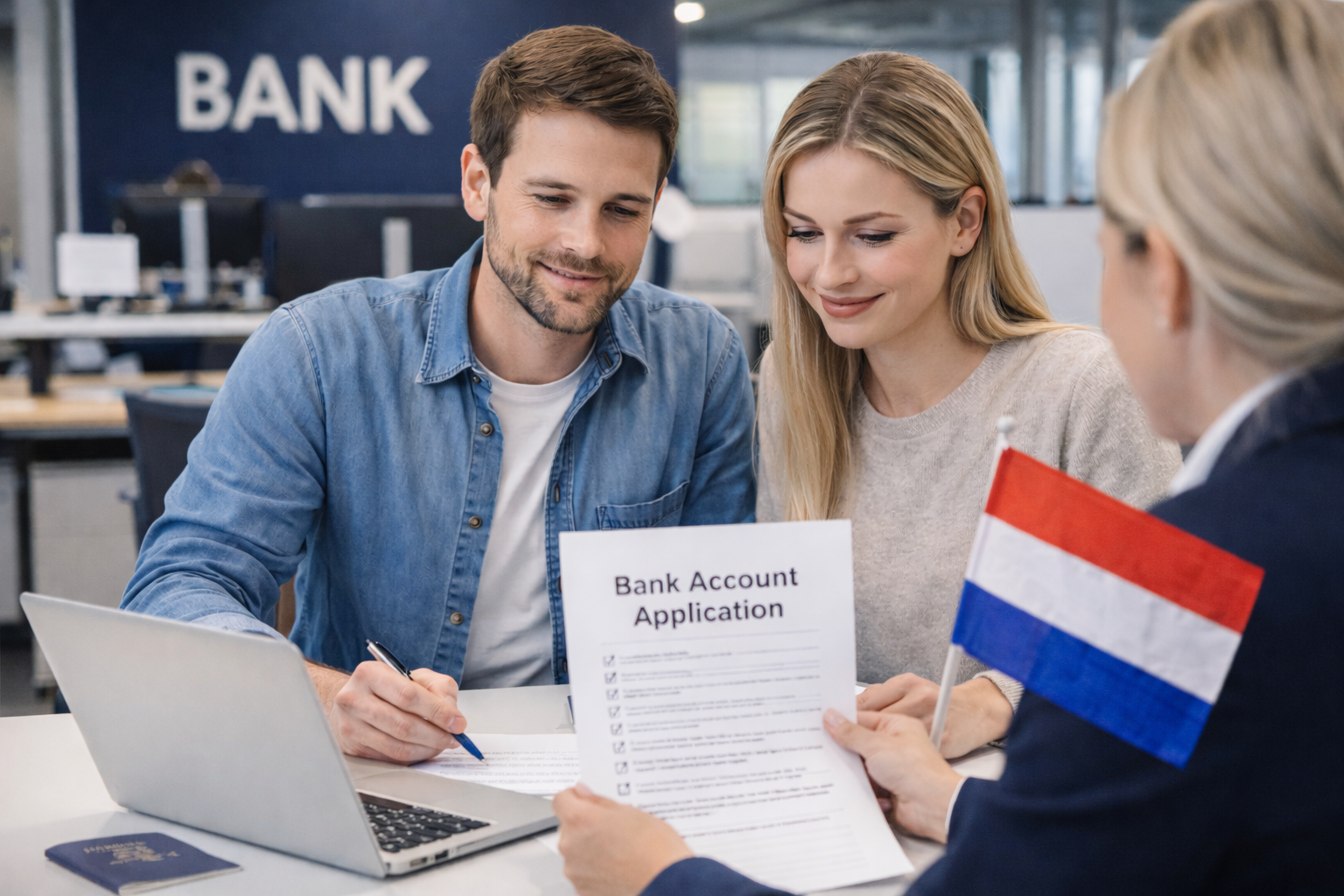
Opening a bank account in the Netherlands may seem difficult if you do not speak the language, but in reality many banks offer the process in English. More and more institutions are adapting their procedures for foreigners, making the formalities quick and transparent. It is worth knowing which documents to prepare before visiting a branch or registering online. This will save you time and help you avoid unnecessary stress. Read this guide and see how to open an account without complications.
What documents are needed to open a bank account in the Netherlands?
Banks require several basic documents to confirm your identity and residential address. The most important are a passport or ID card, a BSN number and a rental agreement or proof of address. Some banks also accept a temporary employer address. It is worth preparing everything in advance so that the process goes smoothly.
Documents you need to prepare:
- a valid passport or ID card;
- a BSN number;
- proof of residential address;
- an employment contract or document from an employment agency.
Each of these documents makes it easier to verify your details in the banking system. If you do not yet have a BSN number, some banks offer a temporary account. Many institutions also provide customer service in English. This is a good solution for people who have only recently arrived in the Netherlands.
What does the process of opening a bank account look like?
At most banks, you can open an account online or during a visit to a branch. The online process is quick and available in English. You simply need to upload photos of your documents and confirm your identity. The entire procedure usually takes several minutes.
After verification, your details are entered into the banking system. A payment card is sent to your home address within a few days. Mobile apps offered by Dutch banks are very intuitive and make everyday transactions easier. This means you can start using your account almost immediately.
How can you open an account without speaking Dutch?
Not speaking Dutch is not an obstacle to opening a bank account. Most banks offer customer service in English, both online and in branches. Many employment agencies also cooperate with banks and help employees with the formalities. This makes starting life in a new country much easier.
If you use a mobile app, most messages are available in English. You can also use a translator on your phone during a visit to a branch. This will help you understand every stage of the process. Over time, using online banking will become intuitive.
Interesting fact – which banks are most often chosen by foreigners?
Among new residents of the Netherlands, banks offering a simple registration process are the most popular. Institutions with intuitive apps and English-language customer service are commonly chosen. The ability to open an account online also plays an important role.
An interesting fact is that many seasonal workers use banks that cooperate with employment agencies. This makes it easier to start work quickly. As a result, formalities are kept to a minimum.
What costs and fees apply at Dutch banks?
Most banks charge a small monthly account maintenance fee. The amount depends on the type of account, but it is usually low. There may also be additional costs for the card or foreign transactions. It is worth checking these fees before signing the agreement.
Some banks offer promotional conditions for new customers. You may also benefit from low fees for using the app and making transfers within the European Union. If you work through an employment agency, ask whether the bank offers preferential conditions. This can help you reduce your expenses.
How should you prepare before visiting a bank or registering online?
It is a good idea to keep all your documents in one place to avoid delays. Check that your details are up to date and match your documents. Prepare the phone on which you will receive verification codes. This will speed up the account-opening process.
The most important steps before opening an account:
- prepare your identity documents;
- check your BSN number;
- make sure you have proof of address;
- check whether the bank offers customer service in English.
If you have any doubts, you can contact the bank’s helpline. A short conversation will help you determine which documents are required. This will help you avoid unnecessary visits.
Summary – how to open a bank account in the Netherlands without problems?
Opening a bank account in the Netherlands is a simple process if you have the correct documents. It is worth choosing banks that offer customer service in English. This makes all formalities clear and quick to complete. Having a bank account also makes it easier to start working and manage everyday life in the Netherlands.
FAQ – frequently asked questions about opening a bank account in the Netherlands
Before opening an account, many questions may arise about documents and formalities. Below you will find answers to the most common ones.
1. Can I open an account without a BSN number?
Some banks offer temporary accounts without a BSN number. Once you receive your BSN, you can update your details. This can be a good solution when you are just starting out. It is worth asking your chosen bank about the available options.
2. How long does it take to open an account?
The online process usually takes several minutes. At a branch, it may take longer depending on the queue. Delivery of the payment card usually takes a few days. Overall, the process is straightforward.
3. Do I need to speak Dutch?
No, most banks offer customer service in English. You can also use a translator on your phone. This will help you understand every stage of the process. Language does not have to be a barrier.
4. What are the account maintenance costs?
Banks charge a small monthly fee. It is worth checking the price list before opening an account. Some institutions offer promotions for new customers. The costs are usually transparent.
5. Can I use a Polish bank card in the Netherlands?
Yes, but additional fees may apply. Using a local bank account is more convenient. This helps you avoid unnecessary charges. It is usually more cost-effective for everyday payments.